Anglo American exits coking coal: $3.88bn Dhilmar deal clears path to Teck merger
FTSE-listed mining major Anglo American (AAL) confirmed at 09:00 BST on Monday 18 May 2026 that it has agreed to sell its Australian steelmaking coal portfolio to UK-registered Dhilmar Limited for cash consideration of up to US$3.875 billion. The transaction marks the company’s complete withdrawal from coking coal, accelerates the multi-year simplification programme launched in May 2024, and removes one of the final regulatory hurdles before the planned merger with Canada’s Teck Resources. Anglo American shares declined 2.6 per cent in early Monday trading in London.
The structure
The deal comprises two elements. First, an upfront cash payment of US$2.3 billion, payable by Dhilmar upon completion. Second, a price-linked earn-out of up to US$1.575 billion, dependent on prevailing steelmaking coal prices over a defined post-completion period and representing approximately 41 per cent of the maximum consideration. Anglo American intends to deploy proceeds to reduce net debt; completion is anticipated in the first quarter of 2027, subject to customary competition clearances and pre-emption arrangements.
The Wanblad statement
Chief Executive Duncan Wanblad characterised the disposal as the conclusion of a strategic chapter. ‘Our agreement for Dhilmar to acquire our steelmaking coal business in Australia is testament to the high quality of these assets and our people’, he said in the announcement. ‘Dhilmar’s leadership brings considerable experience of operating major mining assets, including in steelmaking coal, in Southeast Asia and Canada. We will work together with the Dhilmar team and with our workforce, local communities, government, customers, and partners to ensure a successful transition.’
Wanblad also positioned the deal within its strategic context: ‘This agreement represents another major step in the simplification of our portfolio ahead of completing our merger with Teck. Through this transaction, we will complete our exit from steelmaking coal, delivering aggregate cash proceeds of up to US$4.9 billion, given the prior completion of the sale of our interest in the Jellinbah mine for approximately US$1 billion.’
The assets
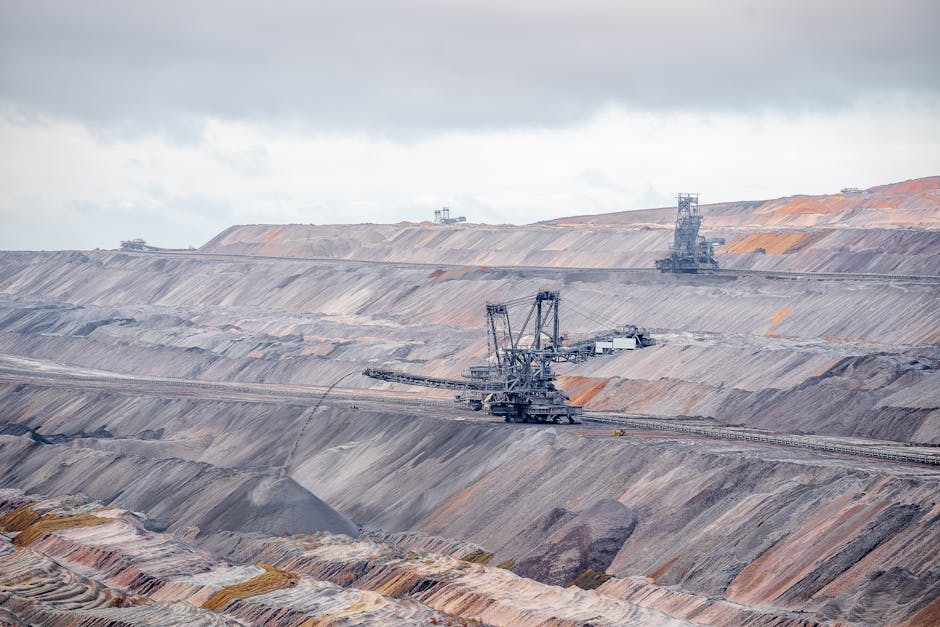
The portfolio is concentrated in Queensland’s Bowen Basin, the world’s most important hard-coking-coal province. Principal mines included are Moranbah North (the underground operation at the centre of the disputed 2024 sale to Peabody Energy), Grosvenor (a long-life longwall asset whose operational ramp-up will materially affect the earn-out), Capcoal, Roper Creek, and the Dawson-related joint ventures. The combination of longwall underground and open-cut surface operations provides the Dhilmar buyer with a portfolio offering broad production-method diversification within a single high-quality coking province.
Who is Dhilmar
Dhilmar is a privately held, UK-registered mining company. Its leadership is headed by Alexander Ramlie, an Indonesian mining executive who also sits on the board of commissioners of AMMAN Mineral, the operator of the Batu Hijau copper-gold mine in West Sumbawa, Indonesia. Dhilmar’s principal existing asset is the Éléonore gold mine in Quebec, acquired from Newmont Corporation in 2025 for US$795 million. The private capital structure allows for a longer-duration view of the coal cycle than publicly listed peers can credibly maintain, given ESG-driven mandate pressures.
Anglo’s transformation
The Dhilmar deal represents the culmination of a comprehensive portfolio restructuring announced in May 2024, when Anglo American responded to an unwanted approach from BHP Group with a defensive plan to exit diamonds (De Beers), platinum group metals, nickel and coking coal, refocusing on copper, premium iron ore and crop nutrients. The merger with Teck Resources, agreed in September 2025 as a merger of equals, will create a copper-and-critical-minerals company with a market capitalisation north of US$53 billion. The Peabody arbitration, continuing after Peabody’s 2024 withdrawal from a prior deal on the same assets, proceeds in parallel.
European read
For European institutional investors, the deal carries two significant signals. First, the public mining majors are pursuing irreversible exits from thermal and metallurgical coal, with capital rotating towards critical minerals essential to the energy transition – particularly copper, where global supply remains structurally short. Second, the buyer-side: private capital is consolidating coal assets that no longer fit public-market mandates. The structural shift from public to private ownership of coal will accelerate, with consequences for transparency, climate disclosure, and ultimately for the pace at which the assets are eventually wound down. The next chapter of mining is being written in copper boardrooms, but the previous chapter is closing in private vehicles like Dhilmar.