
UK economy and politics dissected at UKICE lunch hour event
Economists and policy analysts gathered this week for the latest instalment of the UK in a Changing Europe (UKICE) Lunch Hour series, where a frank and at times uncomfortable conversation about the state of Britain’s economy took centre stage. The session drew a packed audience of researchers, journalists and parliamentary advisers, all eager to parse what sluggish growth figures and a fractured political landscape actually mean for ordinary working people.
Growth forecasts and fiscal headroom dominate discussion
The conversation opened with a blunt assessment of the numbers. The UK economy grew by just 0.1% in the final quarter of last year, a figure that one panellist described as “flatlining dressed up as progress.” With the Office for Budget Responsibility projecting growth of around 1% for 2025 — well below the government’s own ambitions — there’s a widening gap between what ministers say and what the data shows.
Fiscal headroom, or the near-total lack of it, kept coming up. Chancellor Rachel Reeves entered the year with roughly £9.9 billion in headroom against her own fiscal rules, a cushion that economists at the event described as dangerously thin given the volatility in global bond markets. Any unexpected shock — and shocks have hardly been in short supply — could force difficult decisions by autumn.
Political instability adding to economic uncertainty
But it’s not just the economics that’s making investors and businesses nervous. Panellists pointed to a broader crisis of political confidence. Labour’s poll ratings have slid sharply since the autumn Budget, and internal party tensions over welfare cuts and public sector pay are starting to look less like teething problems and more like structural fault lines.
Still, one senior researcher at UKICE pushed back on the doom-and-gloom framing. “The UK has been in more precarious positions before and found its footing,” she said. “What we need right now isn’t pessimism, it’s precision — a precise understanding of which levers actually work.”
Trade and the EU relationship back under the microscope
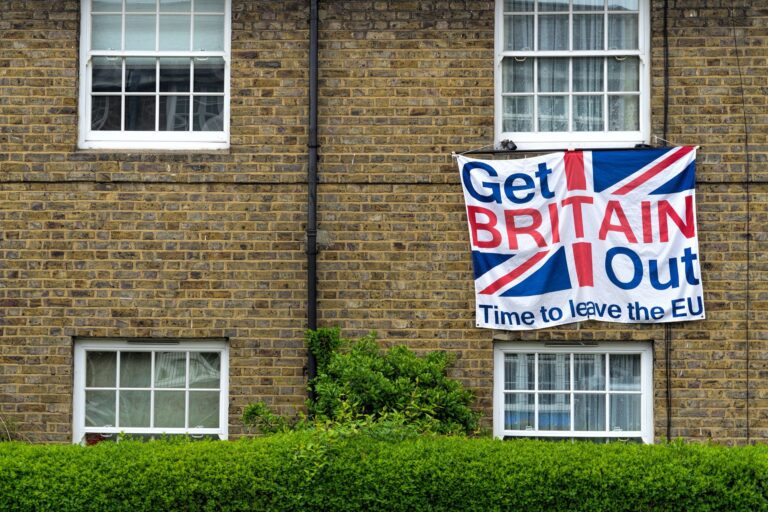
The event also revisited what has become a recurring theme at UKICE gatherings: the UK’s post-Brexit trade relationship with the European Union. Goods trade between the UK and EU remains roughly 15% below pre-Brexit trends when adjusted for global patterns, according to recent UKICE research. And that gap isn’t closing quickly.
So it matters enormously that the government’s reset conversations with Brussels are moving slowly. A veterinary agreement, long seen as low-hanging fruit, has still not been finalised. Every month of delay costs exporters — particularly in agriculture and food manufacturing — real money.
What comes next
The Lunch Hour series continues monthly through the summer. Upcoming sessions will focus on regional inequality and the spending review, both of which are expected to define the political weather heading into 2026.
And with a US trade deal still uncertain and domestic demand weak, the UK economy doesn’t have much margin for error. The conversation at UKICE this week made one thing clear: the hard choices aren’t coming. They’re already here.