Brexit at 10: Britain’s decade of political chaos since leaving EU
Ten years after Britain formally left the European Union, the country that once prided itself on stable, two-party governance looks almost unrecognizable. Five prime ministers. Two general elections. A cost-of-living crisis. And a political culture that still can’t quite agree on what Brexit was supposed to mean.
A revolving door at Downing Street
When Boris Johnson triumphantly declared Brexit “done” in January 2020, few predicted that he’d be out of office within two and a half years. But he was — brought down by a cascade of scandals that would’ve seemed cartoonish in an earlier era of British politics. Then came Liz Truss, whose 45-day tenure as prime minister remains the shortest in British history, ended largely by a disastrous mini-budget that spooked financial markets and sent mortgage rates spiraling. Rishi Sunak followed, only to lead the Conservative Party to its worst electoral defeat in nearly a century in the 2024 general election, losing 251 seats.
Labour’s Keir Starmer swept into Downing Street with a massive parliamentary majority but a surprisingly thin share of the popular vote — just 33.7 percent. It’s a fragile mandate, and everyone in Westminster knows it.
The Brexit dividend that never quite arrived
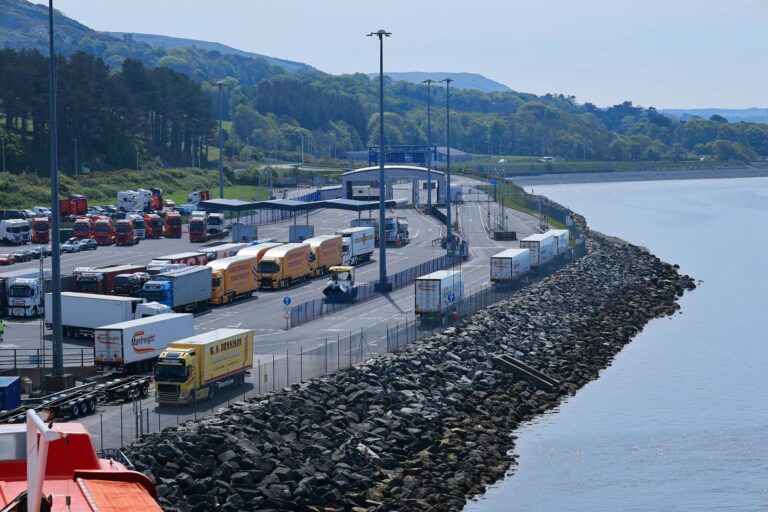
Supporters promised Brexit would free Britain from Brussels red tape, supercharge trade deals, and return sovereignty to Parliament. The reality has been messier. Britain did sign dozens of trade agreements, but most simply rolled over existing EU deals. A comprehensive agreement with the United States — long dangled as the big prize — still hasn’t materialized. Meanwhile, exports to the EU fell sharply in the years immediately following the transition period, with the Office for Budget Responsibility estimating that Brexit reduced Britain’s trade intensity by around 15 percent.
Still, Leave voters largely don’t regret the decision. Polling consistently shows a country divided not so much on whether Brexit happened, but on who’s to blame for its complications.
Reform UK and the fracturing of the right
Perhaps the most striking political development of the past decade is the rise of Nigel Farage’s Reform UK. The party won 14.3 percent of the vote in 2024 and secured five parliamentary seats. Small numbers, but the ideological pressure Reform applies on the Conservative Party is enormous. “The political realignment in Britain isn’t finished,” said one senior Westminster analyst. “We’re still in the middle of it.”
The Conservatives are now fighting an existential battle over their identity — caught between a centrist rump and a hard-right flank that sees Reform as its natural home.
What comes next
Starmer’s government has quietly begun resetting relations with Brussels, signing a new defense and security pact in 2025. But rejoining the EU — or even the single market — remains politically toxic, and Labour won’t go near it.
Britain’s next chapter is still being written. But a decade after the Brexit vote reshaped the country’s identity, the turbulence shows little sign of truly settling down.