
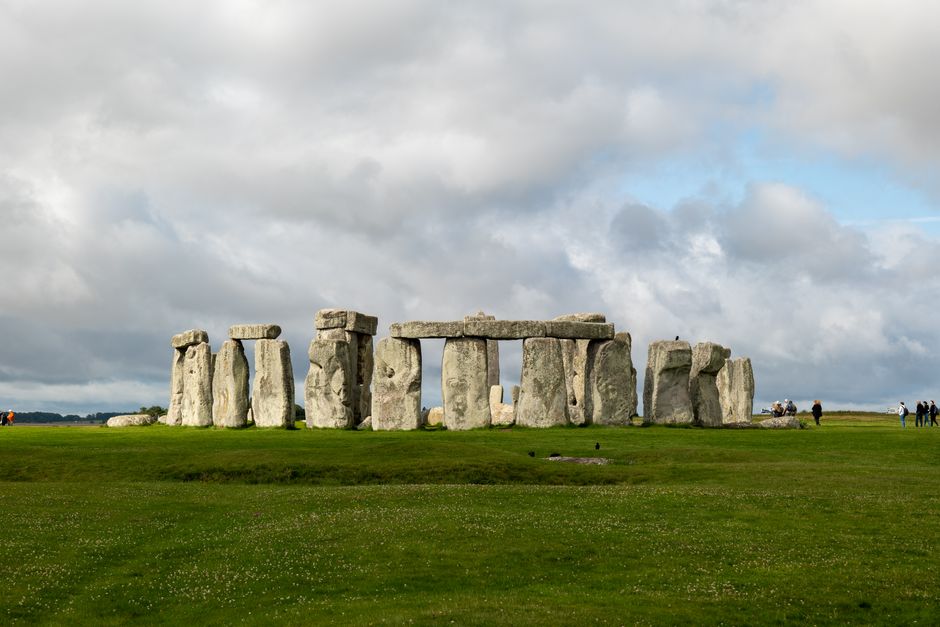
Stonehenge predecessor discovered just three miles from famous site
A simpler, older version of Stonehenge has been unearthed just three miles from the world-famous monument, offering a rare glimpse into the minds of the prehistoric people who first began shaping Britain’s ancient landscape. The newly discovered structure, believed to be around 5,000 years old, consisted of just two large timber posts — yet they were deliberately aligned to mark both the summer and winter solstices.
What archaeologists actually found
The site, located near Amesbury in Wiltshire, was identified through a combination of ground-penetrating radar surveys and targeted excavation. Researchers found two substantial post holes in the chalk bedrock, spaced roughly 20 feet apart. When the alignment was calculated, it matched the solar axis precisely — the same axis that would later be built into the grand stone circle at Stonehenge itself. Pottery fragments recovered from the site suggest occupation dating back to approximately 3000 BCE, placing it among the earliest known ritual structures in the region.
It’s a striking find. Two posts in a field sounds almost unremarkable — until you realize those two posts were tracking the sun with the same intent as one of the most complex monuments ever built.
A blueprint for something bigger?
Archaeologists are cautious about drawing too straight a line between the two sites. But the proximity and the shared solar alignment are hard to ignore. Some researchers believe the timber structure may represent an early experimental phase of monument building, when Neolithic communities were working out how to mark celestial events before they had the technology — or the social organization — to haul massive sarsens across the plain. The posts themselves are long gone, rotted away millennia ago, but the holes they left behind tell the story clearly enough.
“What we’re looking at here is potentially the conceptual ancestor of Stonehenge,” said a senior archaeologist involved in the excavation. “The same ideas, the same solar awareness, expressed in the simplest possible form.”
Why the location matters
The Stonehenge landscape is already one of the most intensively studied archaeological zones on earth. Yet it keeps producing surprises. The three-mile distance from this new site to Stonehenge isn’t just a footnote — it suggests the wider area was a hub of ritual activity long before the famous stone circle took its final shape around 2500 BCE. Other nearby features, including the Durrington Walls enclosure and the Cursus monument, all point to a community that was deeply invested in organizing space and time around celestial events.
What comes next
Excavations at the site are expected to continue through next year. Researchers plan to conduct radiocarbon dating on organic material found in the post holes, which should give a more precise construction date. There’s also interest in examining the surrounding area for additional features that may have been part of the same complex. And if the dating confirms the site predates Stonehenge by several centuries, it could reshape how archaeologists understand the very origins of one of the world’s most enduring mysteries.