Three weeks after Havering: how Reform UK is restructuring the British political landscape
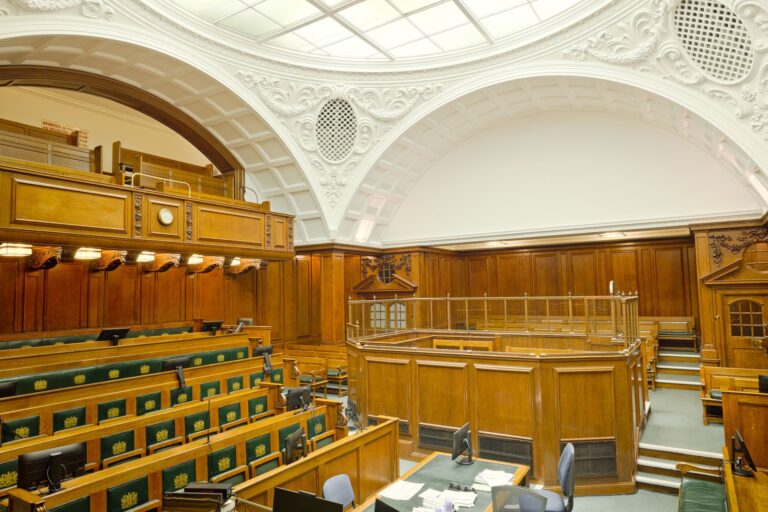
Three weeks after Nigel Farage posed with winning Reform UK councillors outside Havering Town Hall on 8 May 2026, the political map of England has visibly shifted. Reform UK is consistently polling in first place nationally — a position the party has held since March — has taken control of councils across the Midlands and the North, and is posing a structural challenge to both the Labour and Conservative parties ahead of the next general election. The implications go well beyond Westminster: for the EU’s institutional services, the rise of Reform represents a new variable in transatlantic and intra-European calculations.
The May 2026 local elections
The 1 May local elections produced one of the most consequential results for British municipal politics in a generation. Labour lost nearly 1,500 council seats across English councils, while Reform UK and the Green Party made significant gains. Reform took outright control of several councils — including Havering — and emerged as the largest party in many others. The geographic spread is notable: Reform’s gains stretch from the south-east coastal “Red Wall” to former mining communities in the North-East, indicating that the appeal cuts across traditional regional divides.
Farage’s strategy: from disruption to governance
Farage, who returned to active leadership of Reform UK in 2024 after a period focusing on commentary, has explicitly framed the local elections as a “preparation phase for national power.” The party is investing in the development of municipal manifestos, the recruitment of credible council candidates, and basic governance skills — areas where Reform was previously vulnerable to criticism for its lack of administrative depth. Initial reviews of how Reform-led councils have performed are mixed: some report robust internal organisation, others reveal early difficulties with sustained budget management.
National polling: Reform consistently first
According to YouGov’s rolling polls, Reform UK has consistently topped national voting intention since March 2026, with shares ranging between 28% and 33%. Labour sits between 20% and 24%, the Conservatives between 17% and 21%, the Liberal Democrats between 11% and 14%, and the Greens between 8% and 11%. The picture is heavily fragmented in a way the UK has not experienced for at least a century. The two-party model that has dominated post-war British politics is, for the first time since the Second World War, no longer the default framework for understanding electoral arithmetic.
The Conservative dilemma
Kemi Badenoch’s Conservatives sit awkwardly in this new configuration. Polling at -17 in net favourability — although that is the party’s best score in five years — the Tories face a strategic choice: confront Reform on the right, attempting to recover the voters lost between 2019 and 2024, or anchor a centre-right position that could rebuild a coalition with disenchanted Liberal Democrat and Labour voters. Internal party division on this fundamental question continues to limit the party’s ability to set a clear direction.
The Labour collapse
Beyond the leadership crisis around Sir Keir Starmer (with more than 95 Labour MPs publicly calling for his resignation), the party faces a structural problem. The 2024 landslide was built on a fragile coalition that united “Red Wall” working-class voters, urban progressives, and centrist constituencies in the South. The energy crisis, immigration debates, Gaza, and welfare reform have eroded each component of that coalition. Replacing Starmer — by Wes Streeting, Andy Burnham, or another contender — could buy time, but the underlying structural challenge remains.
Markets watching the leadership question
UK financial markets have so far absorbed the political volatility relatively well. Sterling closed Friday at 1.2725 against the US dollar and 1.1714 against the euro — at the low of its 2026 range, but without any dramatic moves. Gilt yields drifted modestly higher last week, but remain orderly. Caterina Batog, of the British Chambers of Commerce, summed up the prevailing market mood: “Productivity continues to lag behind other advanced economies, business investment remains weak, and political uncertainty has weighed heavily on business confidence.”
Brussels’ reading: a new transatlantic variable
For Brussels, the rise of Reform UK introduces a new variable in the calculation of post-Brexit relations. Farage, historically close to Donald Trump and an outspoken Eurosceptic, would necessarily reorient the UK’s strategic positioning if Reform reached government. EU services are increasingly cautious about committing to medium-term agreements with the current UK government, knowing that any successor administration — Labour or Reform — could substantially renegotiate the trajectory. This has slowed several files, notably youth mobility and financial services equivalence.
Outlook: a transformed landscape
The next general election is scheduled for 2029, but the implicit pressure for an earlier vote intensifies with each passing month. If Reform UK’s polling lead is consolidated through the summer, the calculation will shift from “can Reform win?” to “what kind of government will Reform form?” — and on what coalitions, with what objectives. Three weeks after Havering, the rules of British politics appear to be in genuine flux for the first time in a generation. The question now is whether the country’s political system can adapt to a new multi-party reality — or whether the next election will produce the kind of fragmented result that destabilises a Westminster system designed for binary contests.