
Burnham surges in Labour leadership poll: 34% support among party members
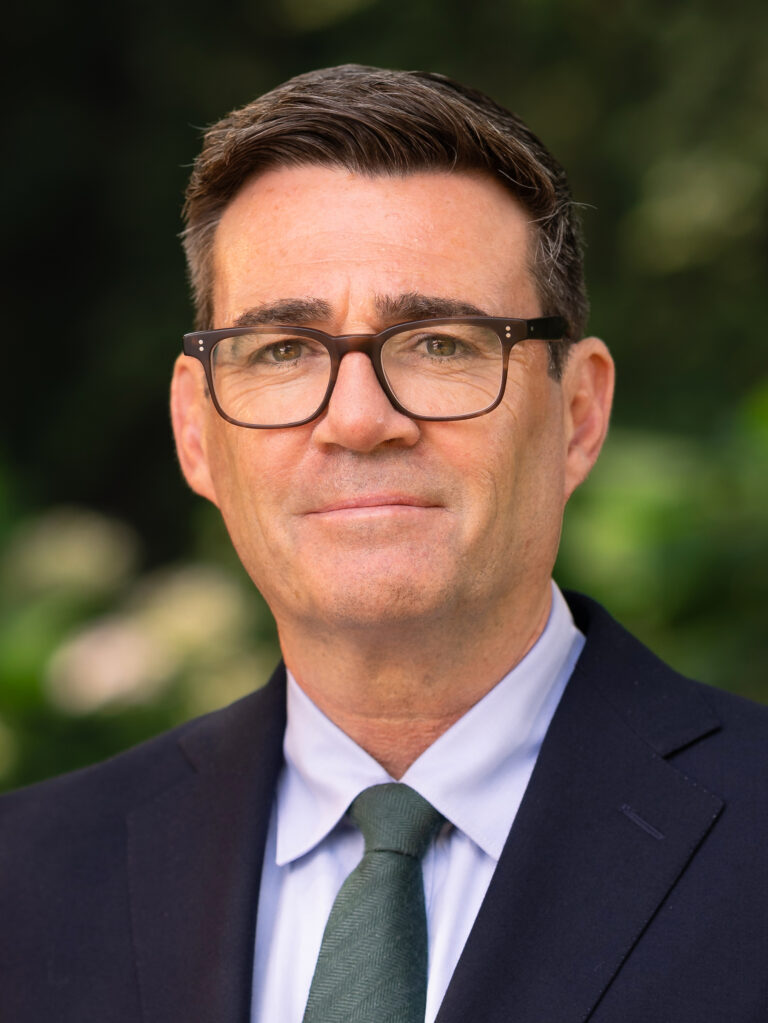
Greater Manchester Mayor Andy Burnham has emerged as the frontrunner to succeed Sir Keir Starmer as Labour leader, according to a new poll of party members that underscores growing unease with the current leadership just months after Labour’s general election victory.
The Survation poll, released on 22 May, shows Burnham commanding 34% support among Labour Party members, nearly double the backing given to his nearest rival, Health Secretary Wes Streeting, who stands at 18%. Education Secretary Bridget Phillipson trails in third place with 12% support.
Pressure Mounts on Starmer
The poll’s publication comes at a particularly sensitive moment for the Prime Minister, with reports emerging that three former cabinet ministers are actively preparing leadership manifestos. Whilst no formal leadership challenge has been declared, the unusual step of preparing campaign materials suggests significant disquiet within the Parliamentary Labour Party about the government’s direction.
Burnham, who unsuccessfully contested the Labour leadership in both 2010 and 2015, has maintained a deliberately independent profile since becoming Greater Manchester’s first metro mayor in 2017. His tenure has been marked by high-profile battles with central government over transport funding and devolution settlements, positioning him as a champion of regional interests against Westminster centralism.
Streeting’s Strong Second Place
The Health Secretary’s second-place showing represents a notable achievement for a politician who entered cabinet only months ago. Streeting has established himself as one of Labour’s most prominent media performers, regularly appearing on broadcast outlets to defend government policy. His forthright approach to NHS reform and willingness to challenge medical professionals has drawn both praise and criticism within party ranks.
Sources close to Streeting emphasised his commitment to the current leadership. “Wes is entirely focused on delivering the NHS reforms this country desperately needs,” one ally said. “Leadership speculation is a distraction from the serious work of government.”
Phillipson Emerges as Contender
Bridget Phillipson’s appearance in the top three marks her emergence as a serious figure in Labour politics. The Education Secretary’s portfolio has thrust her into the centre of contentious debates over school funding and curriculum reform. Her relatively low public profile compared to other cabinet members may explain her third-place position, though 12% support nonetheless represents a significant base within the membership.
The poll findings suggest Labour members are looking beyond the current cabinet for their next leader, with Burnham’s appeal rooted in his distance from day-to-day government decision-making. His outsider status may prove attractive to members concerned about the government’s early difficulties in office.
Burnham’s Regional Power Base
The Greater Manchester Mayor has cultivated a distinctive political brand that blends traditional Labour values with pragmatic delivery on regional priorities. His successful campaigns for bus franchising and opposition to the HS2 route have won him admirers across the political spectrum in the North West. This regional power base could prove crucial in any future leadership contest, providing both organisational strength and a narrative of proven executive experience.
Burnham has consistently refused to rule out a return to Westminster politics. “My focus is on delivering for Greater Manchester,” he said in a recent broadcast interview. “But I’ve never hidden my ambition to serve the Labour Party and the country in whatever capacity is most useful.”
Parliamentary Arithmetic
Any prospective leadership challenger would need to secure nominations from at least 20% of Labour MPs to trigger a contest. The current parliamentary arithmetic makes such a challenge difficult but not impossible, particularly if discontent continues to build over policy direction or electoral performance. The involvement of former cabinet ministers in contingency planning suggests that senior figures believe a contest could materialise sooner rather than later.
As Labour grapples with the challenges of government after 14 years in opposition, the party membership’s preferences may prove decisive should a vacancy arise. With Burnham’s commanding lead suggesting substantial appetite for change, the coming months will test whether Starmer can consolidate his authority or whether Labour faces the prospect of another leadership transition. The next round of local elections and any parliamentary by-elections will provide crucial indicators of the government’s standing and, by extension, the Prime Minister’s security in post.