RAF Fairford incident raises questions over Iran threat to UK
Britain finds itself on the periphery of a confrontation between Iran and the United States, but the past fortnight has suggested Tehran wants to bring the threat inside the UK. Western officials are weighing a public warning that Iran has US military targets in Europe in mind, with RAF Fairford in Gloucestershire a possible target. Yet British scepticism remains over Iran’s ability to launch a drone raid on a secure facility so far from Tehran.
Arrests and withdrawal of bombers
What happened at RAF Fairford is still unclear. Shortly after midnight on 27 September, five men from London were arrested in Whelford, the village next to the airbase, after one of them called 999. They had arrived in three white vans. All five were released on police bail a day later; no explosives were found and there was no discernible plot. Two more men were later arrested on suspicion of terror offences and also released on police bail.
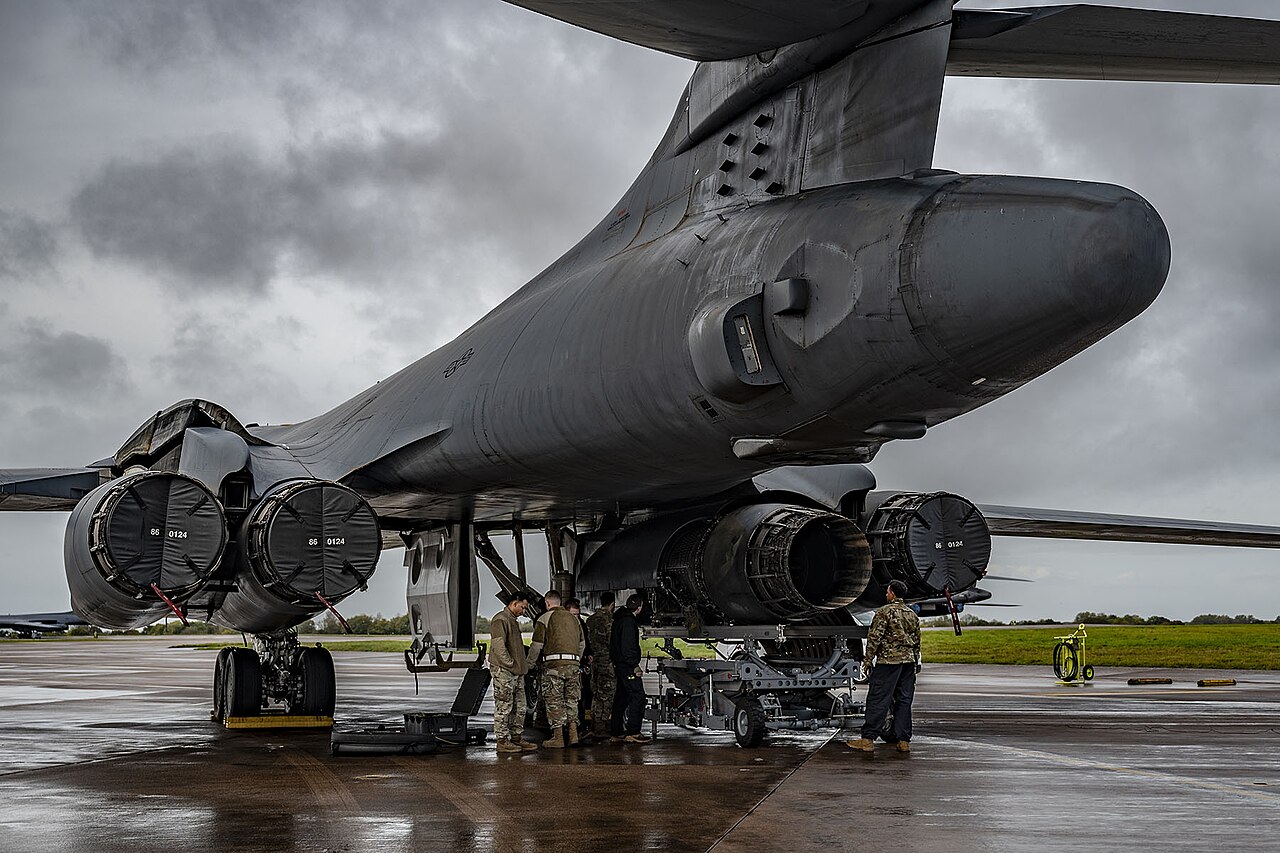
Prime minister Andy Burnham said there were “strong indications” Iran played a part. Met police chief Mark Rowley said on Thursday that “you will see more progress on this investigation”. Still, the US withdrew 12 B-1 bombers stationed at Fairford a week later, with leaks to US media citing fear of a Ukraine-style drone attack. Air force chief Rich Knighton called it “an operational decision to reduce the risk”.
Iran’s track record and capability
Iran has a history of plotting attacks in the UK, particularly against opponents of the regime. MI5 accepts the Islamic Revolutionary Guard Corps (IRGC) sought to coordinate and promote targeting of the Jewish community in the UK and Europe. A campaign of arson attacks on synagogues and similar sites began in March. The IRGC has traditionally hired criminal gangs for such tasks.
Lord Ricketts, a former UK national security adviser, said Iran has a track record of planning and carrying out attacks especially on opponents of the regime in the UK. “Given the use of Fairford by US bombers, it’s only prudent to assume that they would see an interest in attacking a wider range of targets, whatever their involvement in the Fairford incident,” he said. But Dr Antonio Giustozzi, a terrorism specialist at the Royal United Services Institute, called the drive to the village “a feint”. He doubts Iran could bring military-grade explosive to the UK, saying the last people to do so were the IRA.
Wider threats and prosecutions
The wider Iran threat in the UK is now elevated. A week ago, two Iranian nationals were charged with terror offences. Salam Ahmadyan from Liverpool and Rahman Salehi from Salford are accused of trying to target the Jewish community in Manchester with a homemade chlorine powder bomb. Prosecutors said the pair were in contact with a third party in Iran who directed them and sent instructions on preparing an explosive device.
In early May, the US indicted Mohammad Baqer Saad Dawood al-Saadi, an Iranian-Iraqi dual national, for promoting and coordinating 18 arson and low-level terror attacks against Jewish and US sites in the UK and Europe during March and April. He pleaded not guilty and faces trial. Four people have pleaded guilty to arson in a case involving firebombing of Jewish community ambulances in north London, causing an estimated £1m damage. Jonathan Hackett, a former US marine and intelligence specialist, said the goal is to create a wedge between the US and its allies.