
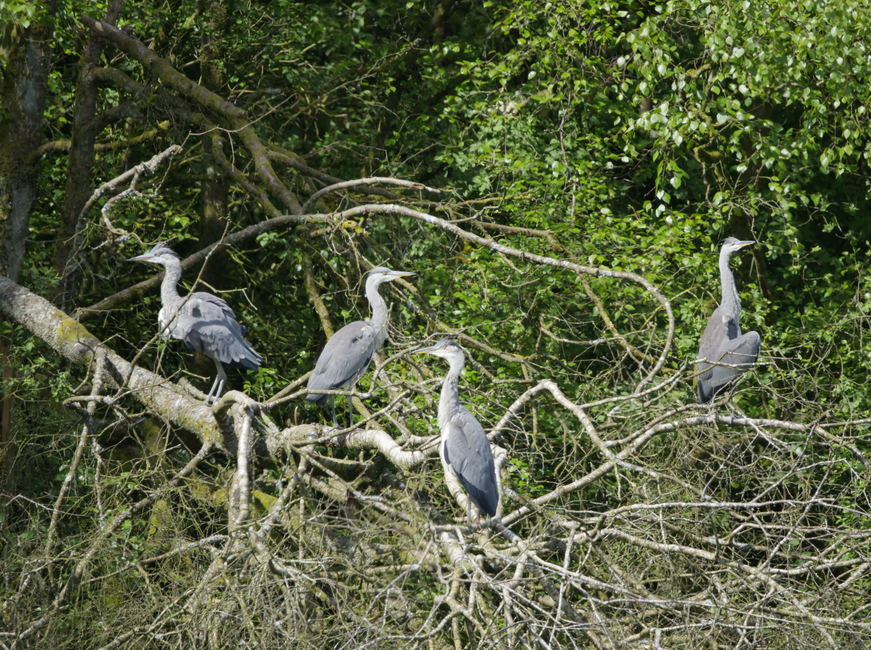
Tropical heron spotted in UK for first time as rare birds flock in
A striking tropical heron has been seen on British soil for the very first time, sending the country’s birdwatching community into a frenzy and marking what experts are calling an extraordinary season for rare avian sightings across the UK.
A first for British shores
The bird in question — a striated heron, typically found across sub-Saharan Africa, Asia, and parts of South America — was spotted earlier this week on the Somerset Levels, drawing dozens of twitchers who travelled hundreds of miles to catch a glimpse. It’s a genuinely historic moment. Britain’s official bird records committee confirmed the sighting after reviewing photographic evidence, and the species has never before been verified anywhere in the United Kingdom.
The striated heron, a compact and secretive bird about 44 centimetres long, was first noticed by a local birder who initially thought it was an odd-looking little egret. But something about the posture and colouring didn’t add up. A closer look — and a flurry of calls to fellow enthusiasts — quickly revealed what they were actually dealing with.
A bigger pattern emerging
That’s the thing about this autumn. It isn’t just the heron. Over the past six weeks, UK birdwatchers have recorded at least four other species turning up far outside their normal ranges. A blue-cheeked bee-eater was spotted in Norfolk. An Eleonora’s falcon — a Mediterranean specialist — appeared briefly in Cornwall. And a lesser kestrel, more at home in the grasslands of Spain or Turkey, was observed in East Yorkshire for three days before moving on.
Birdwatchers and ornithologists are connecting these arrivals to shifting weather patterns and changing migration routes driven by climate pressures. Birds that once would have been deflected away from Britain are now making landfall here with increasing regularity.
“We’re seeing vagrant species that would have been once-in-a-decade events appearing multiple times in a single season,” said a spokesperson for the British Trust for Ornithology. “It’s a reflection of how dramatically the natural world is changing around us.”
Twitchers in overdrive
The response from the birding public has been immediate and intense. More than 300 people visited the Somerset site within 48 hours of the heron being confirmed. Local roads became briefly gridlocked on Thursday morning. Some visitors came from as far as Scotland and Wales.
That kind of dedication isn’t unusual in the twitching world. But the sheer number of headline sightings packed into a single season is something even seasoned birders say they haven’t seen before.
What comes next
Nobody really knows whether the striated heron will stick around long enough for everyone hoping to see it. These birds are notoriously difficult to predict. It’s already been present for four days, which is longer than many vagrant records last.
What ornithologists do expect is that the broader trend won’t slow down. As climates shift and weather systems grow less predictable, Britain may well become a regular stop for species that maps and field guides never anticipated. For birdwatchers, that’s equal parts thrilling and sobering.